As the Israeli war on Lebanon continues to dominate world headlines, Israel’s nearly one-sided war against Gaza seems to be taking place in a relative media blind spot. United Nations humanitarian agencies estimated on August 3rd that 1,050 Israeli artillery shells were fired into Gaza in the preceding week and “…since 28 June, 175 Palestinians have been killed, including approximately 40 children and eight women, and over 620 injured in the Gaza Strip… Palestinians have fired on average between 8-9 homemade rockets per day towards Israel (319 in total) and the Israeli military has fired on average 200-250 artillery shells per day into the Gaza Strip and conducted at least 220 aerial bombings.” Read more about Behind the media's Gazan blind spot
Thousands of people marched through the centre of Brussels on Sunday to protest Israel’s war on Lebanon. It was the third consecutive weekend that protestors held a demonstration in the Belgian capital. This week, many more Belgians joined. Protesters demanded an immediate ceasefire. They waved Palestinian and Lebanese flags and chanted “Lebanon burns and the world is watching.” Among the protesters were members of the leftist Belgian Union of Progressive Jews and a group of young children wearing white T-shirts and carrying white balloons walked at the head of the march. Read more about Photostory: Thousands March in Brussels Against Israel's War on Lebanon
***IMAGE1***People walk the dusty, broken roads in scorching summer heat, taking shelter in the basements of empty buildings. In Gaza and Lebanon, in the refugee camps of Khan Younis and Rafah, in Tyre and Beirut, in Nabatiyeh and Sidon, hundreds of thousands of men, women and children seek refuge. As they flee, they risk the indiscriminate wrath of an enemy driven by an existential mania that can not be assuaged, only stopped. Ambulances are struck, UN observers are struck. Warning leaflets are dropped from the sky urging people to abandon their homes, just as they were in 1996, 1982, 1978, 1967 and 1948. The ultimately impossible decision in Gaza and Lebanon today is: where does a refugee go? Read more about The refugees' fury will be felt for generations to come
It is finally time. After years of internal arguments, confusion, and dithering, the time has come for a full-fledged international boycott of Israel. Good cause for a boycott has, of course, been in place for decades, as a raft of initiatives already attests. But Israel’s war crimes are now so shocking, its extremism so clear, the suffering so great, the UN so helpless, and the international community’s need to contain Israel’s behavior so urgent and compelling, that the time for global action has matured. A coordinated movement of divestment, sanctions, and boycotts against Israel must convene to contain not only Israel’s aggressive acts and crimes against humanitarian law but also, as in South Africa, its founding racist logics that inspired and still drive the entire Palestinian problem. Read more about The Case for Boycotting Israel
Why were you traveling in Nablus, he asks. There are beads of sweat on his upper lip, the stubble on his chin is fair. He has found a way to prop his M-4 carbine against the wall behind him so that its sling rests loosely on his shoulder. The blue-eyed corporal next to him slams his palm against a steel beam inches from a woman’s face. She startles and retreats to the imagined line behind us, corrects her hijab along her hair line and stares through him. Read more about A dialogue at Huwara Checkpoint
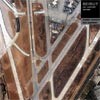
The destruction of all three runways of Beirut International Airport and the airport fuel tanks took place in the early days of Israel’s attack on Lebanon. Before and after pictures of the destruction, as well as the destruction of the Harat Hurayk neighborhood in the southern suburbs of the city are shown in this multimedia piece authored by EI design team member Ken Harper. Sources: Digital Globe, Space Imaging. Read more about Beirut: Before and after Israeli bombing
We, the undersigned Palestinian filmmakers and artists, appeal to all artists and filmmakers of good conscience around the world to cancel all exhibitions and other cultural events that are scheduled to occur in Israel, to mobilize immediately and not allow the continuation of the Israeli offensive to breed complacency. Like the boycott of South African art institutions during apartheid, cultural workers must speak out against the current Israeli war crimes and atrocities. We call upon you to make your voices heard in calling for an end to this bloodshed and an end to this oppression that has lasted too long. Read more about Palestinian Filmmakers, Artists and Cultural Workers Call for a Cultural Boycott of Israel
A group of young American Jews staged a “Die In” on Tuesday August 1, 2006 in downtown Boston. “We want to break the false consensus of unequivocal support for Israel and make it known that many American Jews disagree with our government’s support of Israeli aggression. We also want to call attention to the human rights crisis occurring in Gaza and Lebanon,” commented group member Matt Soycher of Jamaica Plain. “As young American Jews, we are outraged and frightened. Recent rallies called by Jewish organizations in support of Israel’s attacks on Lebanon and Gaza have not spoken for us. Now, we are speaking for ourselves.” Read more about Young Jews stage "die-in" in Boston to protest Israeli war
“You are a Christian?” a foreign tourist inquires with marked disbelief of a Palestinian tour guide in Bethlehem. “When did you convert?” This response by foreigners, Christian or not, is unfortunately not uncommon in Palestine. Even in Bethlehem, the origin to which many trace the very roots of their Christian faith, this disbelief goes hand-in-hand with tourists’ visits to the Church of the Nativity — visits that seem to carry with them some image of a time long past with only archaeological or religious sites remaining with little consideration for the “living stones” that have continuously borne witness to this tradition for two millennia. Read more about Christianity in Palestine: Misrepresentation and Dispossession
Sunday, 30 July 2006, while US Secretary of State Condoleezza Rice was in Jerusalem to meet with Israeli Prime Minister Ehud Olmert, a US-manufactured weapon was dropped by Israeli-manned fighter jets on a residential building in Qana, southern Lebanon. Over 50 civilians perished, most of them children. No arms were found in the building. The village was the site of another massacre ten years ago, when Israel struck a UN post sheltering civilians. That time, over 100 died. Human Rights Watch condemned the strike, and stated that responsibility “rests squarely with the Israeli military,” and emphasized that the “consistent failure to distinguish combatants and civilians is a war crime.” Read more about Photostory: Devastation at Qana