All Content

Protest Biased Media Coverage of Palestine and Palestinians


The American-Arab Anti-Discrimination Committee expresses deep concerned by the alarming hostility expressed by media commentators towards the Palestinian people in the wake of the death of Palestinian Leader Yasser Arafat. These comments, with exceptions, contain a surprising array of dehumanizing and overtly racist comments against the Palestinian people.  Comments such as the ones listed below can only be regarded as an incitement to ethnic hatred of the Palestinians. Surely the denigration of an ethnic group, a people who have been living under an ongoing 37-year Israeli military occupation, constitutes a violation of any system of journalistic standards. 

Limited number of child soldiers, all sides implicated


The volume of children recruited in the Israeli-Palestinian conflict remains a small fracton of the problem in other conflict zones such as in Africa. A new report stated that both Israeli and Palestinian government forces have been implicated in the misuse of Palestinian children. While the Palestinian Authority has recruited some under-18s for its security forces, the Israeli army and intelligence services have sought to recruit children as informers, often putting pressure on them to collaborate. Israel detaines at least 350 Palestinian children a year. Some of these children have reported torture and are often treated in ways which fall short of standards on juvenile justice. 

EI speaks about Arafat on CounterSpin


The death of Yaser Arafat was seen by many in the media as a new opportunity for peace in the Middle East. But many outlets took the news as a chance to recycle some very old and discredited charges. What else was notable about the coverage of Arafat’s death? CounterSpin spoke to Ali Abunimah of the website Electronic Intifada. CounterSpin is FAIR’s weekly radio show, hosted by Janine Jackson, Steve Rendall and Peter Hart. It’s heard on more than 125 noncommercial stations across the United States and Canada. MP3 format. 

On the Palestinian Road to Elections: The System


The Palestinian Legislative Council has begun making changes in the electoral system. One should expect that those members of the Legislative Council would have learned from mistakes made during the 1996 elections. Again, party politics has driven politicians change the rules to benefit the ruling party. Reviewing the 1996 electoral system, one must expect that people learn from their mistakes. Between 1996 and 1998 EI’s Arjan El Fassed was doing research on institutional design and the choices made by Palestinian officials. Today he looks back at the 1996 elections to draw conclusions for the coming elections. 

Flags in Palestine


“I suddenly remember that some twenty years ago, in the 1980s, the Israelis forbade the Palestinians to even color the Palestinian flag, let alone to hoist it in the streets. The flag was considered a danger to public order. During the first Intifada Israeli soldiers forced Palestinian citizens to paint over Palestinian flags that covered the walls of the streets. Mary still remembers those days very well. Painters sometimes circumvented the prohibition by showing a Palestinian salad containing the colors of the flag: black and green in the olives, red in the tomatoes, and white in the cheese. Or women’s embroidery containing those colors.” Toine van Teeffelen reports from Bethlehem. 

A cultural protest against the wall


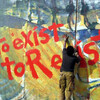
The wall Israel is building on Palestinian land is not only violating Palestinians’ right to freedom of movement and obstructing them from their source of income, but it is also blocking their view of natural sunrise and sunset. It is blocking the hope of a bright future and a just peace. History shows that building walls rarely solves conflicts or guarantees security. As a creative and non-violent protest against the Segregation Wall, the International Center of Bethlehem organized for three muralists from Mexico to join with locals to deface the wall. The three artists, Alberto Aragon Reyes, Gustavo Chavez Pavon and Erasto Molina Urbina arrived in Palestine Oct. 19 to begin work and stayed in Bethlehem. 

The Case of Ariel Sharon and the Fate of Universal Jurisdiction


In June 2001 a criminal complaint on behalf of twenty-eight survivors of the 1982 massacre at the the Sabra and Shatila refugee camps in Beirut was brought before a Belgian court. For their roles in the massacre, Prime Minister Ariel Sharon of Israel, Army Major General Amos Yaron, and several members of the the Lebanese Christian militia were charged with war crimes, crimes against humanity, and genocide. The entire proceeding immediately became known as the “case of Ariel Sharon.” This book is a series of essays about the case of Ariel Sharon, its meaning and consequences for the fate of universal jurisdiction. 

EU delays action on nine draft resolutions on Palestine


The UN Committee on Special Political and Decolonization (also known as the Fourth Committee) decided this afternoon to defer action on nine draft resolutions — four relating to the work of the United Nations Relief and Works Agency for Palestine Refugees in the Near East (UNRWA) and five on Israeli practices in Arab territories occupied since 1967. It made that decision at the request of the representative of the Netherlands, acting on behalf of the European Union and associated States, and the observer for Palestine. The introduction of the texts followed in-depth consideration of the report by UNRWA’s Commissioner-General as well as that of the Special Committee to Investigate Israeli Practices. 

Arafat's face appears on grilled cheese sandwich


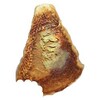
A local man in Louisville, Kentucky, was surprised, after making a grilled cheese sandwich and taking a bite out of it, to see the face of Yasser Arafat staring at him. “I made the sandwich just before sitting down to watch Fox News on November 10th,” Ben Larper told BNN. “After I took the first bite, the news about Arafat’s death came on. I stopped eating and put the sandwich down to watch the report. When I reached down for the sandwich, there it was, the same face as on the television!” 

Dear Friend, This mail may not be surprising to you...


The perpetrators of Advance Fee Fraud (AFF), known internationally as “4-1-9” fraud after the section of the Nigerian penal code which addresses fraud schemes, are often very creative and innovative. The following e-mail is a genuine 419 scam letter, puporting to be from Suha Arafat, published by www.theregister.co.uk and reprinted here with permission.