All Content

Letter from Beirut: Eerily silent in the city


July 15 morning update: After all the retaliations it was eerily quiet after 1:00 am in Beirut Friday night. Israeli ships could be seen encroaching the perimeter of the northern seaside. The Israeli planes were too busy hitting what they had left in the south and beginning their northern operations to bother with Beirut.  We heard the planes all night but they were in the distant as they passed over and kept on trucking up north. The fires are still burning in Bir Hassan from yesterdays attacks. Smoke billows in formations like cumulonimbus clouds. 

ICRC bulletin - Gaza


The humanitarian situation in Gaza remains precarious as its 1.4 million inhabitants suffer the effects of the Israeli operation “Summer Rain.” The number of casualties is increasing daily. As at 10 July 55 Palestinians had been killed and over 180 injured since the beginning of the operation, according to the Palestinian Ministry of Health. These numbers include both civilians and militants. On the Israeli side, one soldier had been killed in action. Infrastructure was the main target during the first days of the Israeli military operation. 

Mohammed and his family in Tyre


Saturday July 15 — It is not me they should be worrying about, my friends from countries around the world who have been calling since Wednesday; after all I live in one of the safest areas of this country, next to embassies and prime ministers. I have water and electricity and, above all, the Internet. If they are to worry, they are to think of the tens of people I am calling everyday. People in the south of Lebanon who are under the shelling, and isolated from the rest of the country. If I am to share a diary I will not share mine, but that of my friend Mohammed and his family. 

Shatila Refugee Camp: "What do we have left to fear?"


Since there was no power and I couldn’t be glued all day to the news, I decided to go to Shatila [refugee camp]. The city was almost empty; there were few cars in the streets and few open shops. The cab dropped me at the Sabra area, the “poor souk” as they call it in Beirut, which was bustling with people buying food supplies. All shops were packed except for the butcher and poultry shops, which stood empty. “Meat dishes are a luxury for the poor during normal times, so what do you say about war time?” one of the butchers observed. 

Letter from Beirut: They’re Back


July 12 2006 — Hey everyone just wanted to let you all know that all our friends and family are all O.K. A lot of them are unable to go home in the south since the roads have been destroyed, so we all have friends crashing at our houses in Beirut till things calm down. The situation has been escalating this week but no one thought it would get this far, with air raids a nightly occurrence. This morning at 5:30am, I woke to the sounds of Israeli planes coming to hit the airport. We have been set back into the dark ages with power cuts, fuel crisis and Israeli ships controlling the coast and not letting anything come in or go out. 

Letter from Beirut: Sleeping in the day and awake in the night


July 14th, Morning update — Was awakened again by the Israeli planes in the sky and missiles form the sea. The Daahiye in Beirut (densely populated Shiite neighborhood) was hit all night long. The first planes came at 3:30am, it has been raining ever since. They hit the power plants in the south on their way up to Beirut along with a bombardment of the Damascus Highway (the freeway linking Beirut to the Bekka and on to Syria). We are cut off, trade and supply wise, from the rest of the world. 

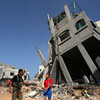
Photostory: Damage after Israeli bombing of southern suburbs on Thursday night


Israeli war planes are bombing Beirut. Over 70 Lebanese civilians have died since the Israeli military launched a major military offensive against Lebanon on Wednesday, July 12th. Bombs targeted civilian infrastructure throughout the country, including the key highways and bridges across southern Lebanon effectively halting all cross-country transportation. Pictured in this photo is a mosque on the edge of Beirut’s southern suburb with smoke in the sky above due to Israeli missile strikes on the Beirut international airport. 

Letter from Beirut: Return to the Dark Ages


July 14th, Evening update — Well the entire Daahiye is debilitated…they have been bombing all day long…the Israeli birds and sea vultures are no longer limited to nocturnal activity. They completely obliterated the roads even more than before south and east…now they are beginning with the north… The airport building itself was also hit whereas before it was limited to the runways… they fixed the take off runway earlier on Thursday and 5 planes took off loaded with passengers before the Israeli planes hit it again and obliterated the airport building itself. 

What they want is the head of the resistance movement


It’s war again. As in the past, it’s an Israeli war in terms of the men and material; a joint Israeli-American war in terms of its declared and implied political aims. We must prepare for a long, bitter, and costly confrontation because the first aim of the war is to change the rules of the game radically in Lebanon, for starters, then in its neighbor Palestine, then in the rogue state Syria and rebellious Iran. Nothing but an excuse is the claim that this is a response to the successful capture by Hizballah fighters of two Israeli soldiers (with the aim of securing the release of Lebanese prisoners who have languished in Israeli jails for decades). 

UN officials urge end to 'disproportionate' attacks, release of seized soldiers


United Nations humanitarian officials today urged Israel, the Palestinians and Lebanese Hizbollah militants to refrain from disproportionate responses in the current renewed fighting, avoid attacking civilians, end rocket attacks and release immediately all kidnapped people. “We fear a downward spiral to a totally uncontrollable situation,” UN Emergency Relief Coordinator Jan Egeland told reporters in Geneva, where he attended an international meeting on the social, economic, humanitarian needs of civilians in Gaza, describing that area as “a social crisis is becoming a humanitarian crisis.”