All Content

Disturbed by deaths of Palestinian children, Annan stresses need to protect civilians


Distressed by a series of children’s deaths during the ongoing Israeli operations in the occupied Palestinian territory, United Nations Secretary-General Kofi Annan today called on the Government of Israel to take steps to avoid civilian casualties. A spokesman for Mr. Annan said the Secretary-General was disturbed to learn of the deaths of two Palestinian children that occurred over the last few days, particularly since they followed similar incidents earlier in October. 

UN agency for Palestinian refugees face major obstacles in maintaining services


The United Nations Relief and Works Agency for Palestine Refugees in the Near East (UNRWA) faced enormous hurdles in the occupied Palestinian territory that had developed as a result of violence, curfews and closures, Peter Hansen, Commissioner-General of his agency, told the Fourth Committee (Special Political and Decolonization) this afternoon. Introducing his report on the Agency’s activities during the period of July 2003 through 2004, he said the past year had unfortunately seen a dramatic increase in the scale of military operations in the Gaza Strip. 

Human rights experts urge stronger action by international community


Top United Nations experts on human rights today urged stronger action by the international community to counter human rights violations in the occupied Palestinian territories, as the Third Committee continued its second day of dialogue with Special Rapporteurs and independent experts on human rights. Special Rapporteur John Dugard said Israel’s conduct in the occupied Palestinian territories posed the same kind of threat to the credibility of international human rights that apartheid in South Africa had posed in the 1970s and 1980s. 

The Economist Sheds Some Bad Habits


The Economist has a way with cover art. In early 2001, the magazine lampooned George W. Bush’s first transatlantic trip with a cover photo of Neil Armstrong walking on the moon: “Bush goes to Europe,” the caption read. Intellectual, witty and harmless, it was the Monty-Python-meets-MI6 humor that characterizes a magazine that’s above the vainglory of bylines. Last week’s cover showing a photo of Ariel Sharon with an olive branch in his mouth—“Israel’s unlikely dove”—had a different resonance. What was mildly amusing for Economist readers was a cheap shot to Palestinians: Israel’s mass destruction of olive groves is a frustration tactic that Israel has used to displace Palestinians for the past 56 years. 

'Disengagement' will not end Gaza occupation


The Gaza “Disengagement Plan”, the Israeli government’s plan to remove troops and Jewish settlements from the Gaza Strip would not end Israel’s occupation of the territory, Human Rights Watch said today. As an occupying power, Israel will retain responsibility for the welfare of Gaza’s civilian population. Under the “disengagement” plan endorsed Tuesday by the Knesset, Israeli forces will keep control over Gaza’s borders, coastline and airspace, and will reserve the right to launch incursions at will. Israel will continue to wield overwhelming power over the territory’s economy and its access to trade. 

Thinking beyond Arafat


The grave illness of Palestinian President Yasser Arafat has given rise to frenzied speculation about what will happen after he is no longer on the scene. Much of this speculation is based on the false premise that the presence or absence of a single individual is a decisive factor in settling a complex, century-old conflict. EI co-founder Ali Abunimah argues that the “Arafat issue” is a major distraction, and examines who has a vested interest in the veteran Palestinian leader’s survival. 

The International Court and the Wall: An Alternative Road Map


The ICJ advisory opinion, one of the most important legal opinions on the question of Palestine and international peace and security in the region since the United Nations assumed responsibility for the future of the country in 1947, presents a clear alternative to the status quo � i.e., the Oslo process, the international Road Map, the Sharon disengagement plan, and, the April 2004 US letter of assurance to Israel. International law provides the foundation for this alternative. The legal opinion rendered by the ICJ lays out the �driving rules� or universal standards for resolving the conflict. 

Photostory: Khiam Detention Camp


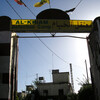
In October 2004, EI’s Arjan El Fassed traveled to Jordan and Lebanon. He visited a number of refugee camps and offices of the Palestine Red Crescent Society in Lebanon and Syria. In Lebanon he also traveled along Lebanon’s southern border where he visited what is left of Khiam Detention Camp, a prison and interrogation camp, used by Israel and the South Lebanese Army from 1985 until the Israeli withdrawal from Lebanon in May 2000. The detention camp is now empty. The prisoners’ testimonies and the cells bear witness to what went on inside. Prisoners were crammed into tiny, filthy spaces where they ate and slept. 

The Rachel Corrie Rebuilding Campaign in Gaza


You’ve heard us say for months that The Rebuilding Alliance is working to build the home that Rachel Corrie stood to safeguard. In the spirit of Ramadan and its call to empathy, we want to let you inside our strategy to build the Nasrallah family home and help end home demolitions in Gaza. We’re encouraging Americans to take in the personal stories of Palestinian families, to invest in their future by helping them rebuild homes and schools, and to defend their rights in court. And when bulldozers are coming, we know we can save those homes and schools when citizens call Congress to intervene. By building this home in Rachel’s name, and then the next, we are building momentum to prevent what Human Rights Watch called “the planned destruction of hundreds more homes” in Gaza. 

Weekly report on human rights violations


This week Israeli forces killed 26 Palestinians, 11 of whom were civilians, including 2 children and a woman. Seventeen of the victims were killed during an Israeli offensive on Khan Yunis. Two of the victims were extra-judicially killed by Israeli troops. Israeli troops invaded Khan Yunis; they destroyed 34 houses and some civilian facilities. Israeli troops conducted a series of incursions into Palestinian areas in the West Bank and Gaza Strip. Israeli forces destroyed eight homes and at least 190 donums of agricultural land were razed in the Gaza Strip. Israeli forces raided homes and dozens of Palestinian civilians were arrested. Israel continued shelling of residential areas and the construction of the Apartheid Wall.