Israel has shut down another internationally mandated investigation of its military actions. Archbishop Emeritus Desmond Tutu and his high-level fact-finding mission, authorized by the UN’s Human Rights Council, have been refused entry by Israel for so long that they have been forced to call off the visit. Israeli Foreign Ministry spokesperson Mark Regev disingenuously claimed that Israel had not denied entry, but simply not yet reached a decision. The families of the 19 Palestinian civilians slain at Beit Hanoun in the northern Gaza Strip on 8 November 2006 will apparently not see even an approximation of justice at this time. Read more about Israel blocks another UN fact-finding mission
Surveys, opinion polls, and now, consultative approaches are increasingly being used to explore Palestinian refugee issues, and to formulate policy. The Civitas project adopted an entirely different approach to the matter. Indeed, civic participation is different even than consultation exercises - participation gives space for the young woman from Egypt (in the quote above) to articulate the complex sentiments, ideology, and political understandings that she possesses. It highlights many of the understandings Palestinians have for Palestine, but crucially it gives a more sophisticated understanding to those reading it about its importance and relevance. Read more about The Role of Participatory Methods for Mobilizing Change
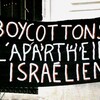
On Saturday, December 16th, 2006 Palestinian solidarity activists gathered on St. Catherine street in downtown Montreal to draw attention to a 2005 appeal from over 170 Palestinian civil-society organizations to, “Boycott, Divestment and Sanctions against Israel Until it Complies with International Law and Universal Principles of Human Rights.” Read more about Audio Report: Montrealers Denounce Israeli Apartheid
Dahlan was a founding member of Shabiba, the youth association of Fatah, head of the Preventive Security Force in Gaza, cabinet minister, security advisor and legislator. During the 1990s he headed a force of 20,000 troops in Gaza. He has good relations with Israel, US and other foreign powers. Both Dahlan and his colleague in the West Bank, Jibril Rajoub, were implicted in financial scandals and human rights violations. Dahlan has a history in trying to curb Hamas. His troops were involved in one of the largest Palestinian arbitrary arrest campaign in recent history. Today, Dahlan has become the face of one side of Fatah as violence increased between Hamas and Fatah. Read more about Who is Mohammad Dahlan?
After months of anticipation, Palestinian Authority (PA) chairman Mahmoud Abbas and his Fatah faction finally launched their attempted coup against the democratically-elected cabinet headed by the Hamas party and prime minister Ismail Haniyeh. Days of interfactional violence, following Abbas’ speech in which he threatened to call new elections (something most legal experts agree he does not have the authority to do), claimed at least seven lives. A shaky truce continued to be violated, and the events of the past week have provided a terrifying glimpse of what may yet await Palestinians if Abbas decides to continue on his disastrous path. Read more about There is still another way for Palestine
The era of the Middle East strongman, propped up by and enforcing Western policy, appears well and truly over. His power is being replaced with rule by civil war, apparently now the American administration’s favoured model across the region. Fratricidal fighting is threatening to engulf, or already engulfing, the occupied Palestinian territories, Lebanon and Iraq. Both Syria and Iran could soon be next, torn apart by attacks Israel is reportedly planning on behalf of the US. The reverberations would likely consume the region. Read more about Do America and Israel want the Middle East engulfed by civil war?
OAKLAND, California (IPS) - Over the past 20 years, the U.S. Christian right has evolved into one of the most powerful grassroots organising forces within the Republican Party, and a host of Christian Zionists have taken a well-earned seat at the foreign policy table. At the same time, their support for Israel is not only growing — it is also becoming an influential political factor. Several prominent Christian right and conservative Jewish leaders have teamed up to found organisations that have provided millions of dollars to Israeli charities, lobbied in support of policies advanced by right wing leaders in Israel, opposed President George W. Bush’s so-called “Road Map” to peace in the Middle East, and have helped defray the costs of the immigration of Russian Jews to Israel, among other activities. Read more about Holy Warriors Set Sights on Iran
Palestinians don’t want fresh elections in the occupied territories, but a free vote for a truly national ruling body. The elections that all Palestinians are demanding today (the millions under occupation and the millions in the refugee camps outside) are for the Palestine National Council, the parliament in exile, which is the national body that represents all Palestinians. The Palestinian people have indeed already spoken: for elections to the Palestine National Council, for lifting the economic boycott of a democratically elected authority; for liberty and to independence. Read more about Under an iron fist
“For seizing the reins of the global media, for founding and framing the new digital democracy, for working for nothing and beating the pros at their own game, Time’s Person of the Year for 2006 is you,” Time’s Lev Grossman wrote in the December 25, 2006 issue. Time magazine realizes sites like The Electronic Intifada, Electronic Iraq and Electronic Lebanon are among a new generation of people changing the landscape of journalism and the open debate of ideas. Read more about Among TIME's Person of the Year
Yasmina Khadra is the pseudonym for Mohamed Moulessehoul, a former Algerian army officer who decided to write under his wife’s name to avoid army censorship. He was in Sydney last year for the Writers’ Festival, at which he spoke about his novel The Swallows of Kabul. It was set in Afghanistan, but he confessed that he had never been there before, and I couldn’t help but wonder how he described the land and the atmosphere of oppression. Reading The Attack, I wondered the same thing. While there is little description of surroundings, and Khadra is a very capable writer, I doubted he had ever been there. This doesn’t weaken the book so much as emphasise that his narration is an outsider’s voice. Read more about Book review: "The Attack: A Novel"