All Content

Palestine: Moving beyond collective denial


It was shocking to see Mahmoud Abbas, the designated head of the US-sponsored Palestinian Authority, warmly applaud the acknowledgement of Israel as a “Jewish state” and “homeland for the Jewish people” in Bush’s inaugural speech at Annapolis. With his clapping hands, Abbas supported the denial of his people’s history, in particular the 1948 mass expulsion that included the destruction of 531 villages and has been followed by the forced removal of Palestinians ever since. EI co-founder Arjan El Fassed comments on the need to object to this denial of Palestinian history. 

Red Cross training Gaza fighters in international humanitarian law


The International Committee of the Red Cross in Gaza has recently begun training Palestinian resistance fighters to respect international humanitarian law. For the past several years various Palestinian resistance factions in Gaza have fired crude homemade rockets at nearby Israeli towns, killing about a dozen Israeli civilians and recently injuring 69 soldiers in one such attack. The rockets usually land in open spaces but cause panic amongst Israeli civilians. EI correspondent Rami Almeghari reports on the training designed to minimize civilian casualties on both sides of the conflict. 

Meet the Lebanese Press: In the shadow of Annapolis


It seemingly took a stillborn conference like Annapolis to break the deadlock in the Lebanese presidential crisis. In a surprise move this past week, the March 14 camp nominated Lebanese army chief Michel Suleiman for the presidency. Suleiman had been considered a preferred candidate for the opposition camp. His long-standing support of the resistance against Israel and his amicable relations with Damascus made him agreeable to the opposition camp. But the army’s recent assault on Nahr al-Bared refugee camp endeared him to the Americans as well. Now, he is emerging as the man of consensus. 

Audio: Crossing the Line interviews Ramallah activist Sam Bahour


This week on Crossing The Line: Over recent years it has been increasingly difficult for foreign passport-holding Palestinians and internationals visiting Palestine to obtain visas and renew them from the governing Israeli occupation. Palestinian-American activist Sam Bahour joins us from Ramallah to discuss Israel’s control of people who wish to visit Palestine. 

Palestinian shepherds' livelihoods in jeopardy


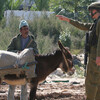
DHAHARIYA, WEST BANK, 2 December (IRIN) - Palestinian herders in the southern part of the West Bank are facing increased poverty due to rising costs of fodder and water, as well as limitations on their access to grazing land, the herders and UN officials said. “Due to global droughts and the rising demand internationally for corn and barley bio-fuels, the prices of corn and barley fodder products have risen dramatically,” said Santiago Ripoll, a food security analyst with the UN Food and Agriculture Organization working in the Hebron area in the southern West Bank. 

The Palestine that we struggle for


The gulf between the PA and the Palestinian people is becoming increasingly obvious. Indeed the whole range of Palestinian political and social forces joined in condemning the repression on Tuesday. The choice for the PA is clear: either to go along with the dictates of the US and the occupation; or to radically alter their course, to return to the people and remember that they are leaders of the Palestinian national struggle. The grassroots movement against normalization with the occupiers will continue to grow. Resistance will continue as the Palestinian people assert their fundamental rights. Jamal Juma’ comments. 

The One State Declaration


“For decades, efforts to bring about a two-state solution in historic Palestine have failed to provide justice and peace for the Palestinian and Israeli Jewish peoples, or to offer a genuine process leading towards them.” So begins a statement calling for a one-state solution signed by among others prominent Palestinian and Israeli scholars and activists. The statement, issued to coincide with the sixtieth anniversary of the UN Partition Resolution sets out principles for “a just, and thus enduring, peace in a single state.” 

After 40 years of occupation "solidarity" is not enough


Over the past 40 years Israel’s occupation of the West Bank, including East Jerusalem, and the Gaza Strip has aggressively targeted both the land and the people of the Occupied Palestinian Territory (OPT). Not simply haphazard structures of concrete, steel and tarmac, Israel’s settlements and their accompanying maze of bypass roads, hundreds of checkpoints, other movement restrictions and the Annexation Wall, are ever-increasing monuments to the dispossession and subjugation of the Palestinian people, at the expense of their fundamental rights guaranteed under international law. 

Shades of grey: Nusseibeh's "Once Upon A Country"


In his new historical autobiography Once Upon A Country, Dr. Sari Nusseibeh, who many accuse of selling out due to his comments regarding the right of return, highlights the shades of grey in a conflict that most people prefer to see in black and white. Miko Peled reviews Nusseibeh’s new book and finds that it shows that neither Rabin, or Barak or any other Israeli prime minister had ever intended to make peace with the Palestinians. Their intention was, and still is, to turn the Palestinian people into “hewers of wood and drawers of water” for the Jewish state that was established on the ashes of a country that, as the book title suggests, once upon a time existed. 

Mission accomplished


So it is over. The much heralded Annapolis “meeting” attended by over 50 countries and organizations has ended, and the result is a vague, non-binding agreement to begin negotiating. In typical fashion, the Bush administration has hailed the conference of low-expectations and even less tangible results as a “success.” Instead of donning a flight suit and landing on an aircraft carrier, US President George W. Bush offered his best Bill Clinton imitation presiding over a ceremonial handshake between Israeli Prime Minister Ehud Olmert and Palestinian President Mahmoud Abbas, like an approving father or Roman emperor. Osamah Khalil comments for EI