All Content

Weekly report on human rights violations

Israeli forces killed 11 Palestinians, including two children. Five Palestinians were killed in a failed Israeli extra-judicial execution. Israeli forces demolished 13 homes in Rafah and razed 170 donums agricultural land in the south of Gaza City. Israel continues to impose a total siege on the occupied Palestinian territories and construction of Israel’s apartheid wall continues despite international consensus against the wall. Palestinian and Arab prisoners initiated a hunger strike in Israeli prisons with a call to improve conditions of their confinement, seeking respect for minimum standards for the treatment of prisoners. 

Israeli authorities detain British journalist


The International Federation of Journalists today challenged the Israeli authorities to “live up to the expectations of a democracy” and allow a journalist they have banned from entering the country to have access and to report freely. “It is intolerable that the country which claims to be the only democracy in the region is afraid to allow a writer access to the country,” said Aidan White, IFJ General Secretary, over the ban on journalist Ewa Jasiewicz, a member of the IFJ British affiliate the National Union of Journalists. Ewa Jasiewicz landed at Tel Aviv airport last Wednesday and was detained by the authorities, who claim she is a political activist. 

Interview: "Operation Rainbow" Follow-up with Creator of 'Rafah Today' website, direct from Rafah


Listen to an interview with Mohamed Omar, an independent Palestinian journalist from Rafah refugee camp in the Gaza Strip. Mohamed is the creator of the independent news website Rafah Today, which documents life and death in the Gaza Strip. Mohamed, who’s home was recently demolished by the Israeli military, speaks about the importance of an independent media movement in Palestine to document and uncover the often hidden realities of the Israeli occupation. The interview outlines the current situation in Rafah, focusing on the constant Israeli Occupation Forces incursions into Rafah refugee camp, while also exploring the aftermath of the massive Israeli military incursion dubbed “Operation Rainbow” in late May 2004. 

Palestinian and Arab prisoners continue with hunger strike


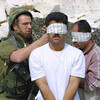
Today thousands more Palestinian and Arab detainees have joined this strike. The strike began in four Israeli prisons on the 15th of August in an attempt to exert pressure on the Israeli authority to improve the conditions of confinement. The detainees announced that their intention was to refrain from consuming all solid food but that they would continue to drink liquids. The Israeli prison service started to impose harsh measures on the prisoners from the moment the detainees declared their intention to strike, including the transfer of 120 leaders from Nafha prison in the Negev desert, solitary confinement, placing them with Israeli criminals, and prohibiting visits. 

Adalah: "Fluids and salt must return to hunger-striking prisoners"


On 17 August 2004, Adalah submitted a pre-petition to the Attorney General’s Office demanding that they issue an order to the authorities of the Israeli prisons in which political prisoners have opened hunger strikes, obligating them to return fluids and salt to the prisoners’ cells. After the announcement of the hunger strike, the prisons’ authorities entered the prisoners’ cells and removed all fluids, such as milk and fruit juice, and salt. The aim of these confiscations was to exert pressure upon the prisoners to abort their strike. Palestinian prisoners began hunger strikes on 15 August 2004. The number of hunger-striking political prisoners reached 2,200 prisoners on 18 August 2004. The prisoners’ strike is a protest against their poor daily living conditions. 

The writing on the wall


The bright red letters stand out starkly against the ugly grey cement. The wall that is slicing through East Jerusalem is some thirty feet high, but casts its shadow for miles. There is little the Palestinians hemmed in on both sides of the wall can do to oppose it. So, the wall is dotted with marks where rocks have been thrown at it in anger, and covered with graffiti. Some graffiti writers ask if the builder of this wall can be a “man of peace”. Some ask how a people whose history is full of ghettos can now be building one. And someone decided to remind us all, in those blood-red letters, that it was “Paid by USA”. 

New Housing Units Sanctioned by Israel Show How Dead the Road Map Is


August 19th, 2004 — Both the New York Times and the Washington Post carried stories yesterday about the announcement in Tel Aviv that Israel’s Housing and Construction Ministry would build up to 1,000 new housing units in settlements in the West Bank. According to these sources as well as Ha’aretz, the Israeli daily, 604 units will be built in Betar Elite and 141 in Maaleh Adumim, which lie in the area of East Jerusalem, and 204 housing units will be built in Ariel and 42 in Karnei Shomron, lying in the West Bank itself. So why does the U.S. administration still pretend that the Road Map still exists? 

Hunger strike "final avenue" for prisoners


Israeli prison authorities have declared they are ready to weigh prisoners every day, and force-feed them if necessary. On August 17, it was reported that prison guards would use “psychological warfare” to break the strike, including holding large barbeques in jailhouses. While Jarrar is not concerned about the BBQs, she’s more worried by the threat of force-feeding prisoners.”In 1980,” she recalls, “two prisoners [Ali Ja’fari and Rasem Halawi] in Nafha prison were force-fed after a lengthy hunger strike. When they put the tubes down, they put them in the wrong place, and they ended in their lungs.” Ja’fari and Halawi both died. 

Book Review: Bethlehem Besieged


Palestinians should have the permission to narrate their own lives, their own hopes, their own history. Putting tragedies, events and experiences into words help ease turmoil and defuse the terror. Writing provides a sense of control and a sense of understanding. For some, writing is a struggle, a matter of survival. As eyewitnesses of tomorrow’s news, we cannot hope to understand what is going on without access to alternative information resources. The compelling stories of Mitri Raheb, a Palestinian Christian pastor of the Evangelical Christmas Church where he ministers to his people in Bethlehem, gives us a window not only into what it is like to have grown up under occupation but also into his soul. 

Administrative detention and torture


The World Organization Against Torture is gravely concerned for the physical and psychological integrity of Alaa Kapisha, given reported ill-treatment and torture to which he has been subjected, and the risk of further treatment of this type that he faces will in detention. OMCT calls on Israeli authorities to guarantee his personal integrity and to immediately release him in the absence of legal charges that are consistent with international law and standers. OMCT reiterates its grave concern over the use of incommunicado detention by Israel, through the issuing of Orders Prohibiting Meeting with Counsel, as this represents a violation of the detainees’ rights under international law.