All Content

Weekly report on human rights violations


This week Israeli forces killed 24 Palestinians, mostly civilians, including 6 children. Seven of the victims were killed in another extra-judicial execution. Israeli forces conducted a series of incursions into Palestinian areas in the West Bank and Gaza Strip. Israeli forces demolished 43 homes and dozens of donums of agricultural land were razed in the northern Gaza Strip. In Rafah three homes were demolished and in Mughraqa Israeli forces demolished seven homes. In the West Bank Israeli forces demolished two homes. Israel continued the construction of the Apartheid Wall and imposed a total siege on the occupied Palestinian territories. 

In Gaza, the dead bury the dead


On September 10, after an Israeli incursion into the northern Gaza Strip that had left at least five dead and dozens wounded, I went to a Gaza City cemetery to look for a young gravedigger. I had met Mossab, a slim 18-year-old boy from Gaza City, a week earlier. He had long ago dropped out of school to pursue a profession that appeals to very few people, but which is catering to more and more youngsters in Gaza. In the city’s Sheikh Radwan cemetery, Mossab, along with several other boys, was employed to dig, guard and take care of the graves of the men, women and children that pack the graveyard. 

Civil society meeting at UN seeks to end Israeli occupation of Palestine


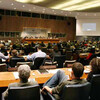
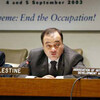
A new draft plan in support of Palestinian rights adopted by a non-governmental conference committee meeting at the United Nations calls for escalating pressure on Israel to end its occupation and threatens to seek divestment, arms embargoes and other sanctions in the event of non-compliance. The “2004-2005 Plan for Action to support Palestinian rights through international law and the United Nations” was presented to the International Conference of Civil Society in Support of the Palestinian People on the last day of a two-day meeting at UN Headquarters in New York after being adopted by its Steering Committee. 

Conditions in Israeli prisons begin to normalize after strike


In her first visit after suspension of the hunger strike, advocate Buthaina Duqmaq paid a visit to Nafha Prison on 7 September 2004. Ms. Duqmaq met the prisoners’ representative Tawfic Abu-Na’im along with Omar Barghouthi, Issa Shabanah and Tareq Zaydan. Abu-Na’im affirmed negotiations with the prison administration are still on. Conditions began to normalize as the administration returned the electrical equipment it had confiscated earlier, extended the exercise period to one and a half hour and returned TV reception but restricted Al-Jazeera, Palestine Broadcasting Corporation (PBC) and al-Manar networks. The administration brought several inmates from solitary confinement back to common holding cells. 

Stories from Gaza


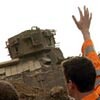
On the 8th of September, Israeli occupying forces made an incursion into the Jabaliya refugee camp - now home to 80,000 Palestinian refugees and their descendents for the past 56 years. The operation went on for three long days In the first few hours of the incursion 4 people were killed and tens of others were injured, many of them seriously. According to physicians who tended to the wounded the Israeli soldiers targeted the chest, abdomen and lower limbs, of boys who were throwing stones at the army tanks and bulldozers while they demolished homes and razed agricultural land. 30 houses were destroyed — 10 completely and 20 partially — which left at least 200 people homeless. The youngsters were protesting in their own way against the presence of the occupying forces in their town, some of them didn’t live to tell the tale. 

Open letter to Madonna


Madonna - Esther, shalom, salaam, welcome. On behalf of Israeli Jews, and Palestinian or Israeli Christians and Muslims seriously opposed to your highly controversial visit, we ask you, with compassion, to reconsider the consequences of coming to Israel/Palestine in this context. This visit takes you to the heart of Occupied Territory in Bethlehem: a closed-off prison, a ghetto, whose civilians now have no work, no freedom, no life. They’ve finished their savings, live now on food handouts from foreign donor agencies. They’ve had their land taken, they have no justice through the courts, this entire city of ordinary folk trying to live a decent life, is imprisoned, while Israel calls the shots. 

Demand investigation into alleged execution of five Palestinians


At 1:00am the Israeli Army attacked homes on Old Najav Street in Nablus, West of the old city. Five young men were killed and one eleven year-old girl. Medical examination evidence suggests the five men were executed. International Solidarity activists, who are presently accompanying UPMRC medical teams in the area, interviewed the Director of Rafidia Hospital, Dr. Samir Abu Srour, where the five men and the young girl were taken. According to Dr. Srour, four of the five men were shot in the head at close range. The bullets did not pass through their skulls and instead exploded the young men’s heads, indicating that they were shot at close range. 

Civil Society Conference presented with action plan to support Palestinian rights through international law


The International Conference of Civil Society in Support of the Palestinian People concluded its work today by hearing a presentation of the “2004-2005 Plan for Action to support Palestinian rights through international law and the United Nations”. According to the draft plan of action, adopted by the Conference Steering Committee, internationally coordinated action would be developed to escalate pressure to end the Israeli occupation and achieve the realization of Palestinian rights. To that end, NGO’s participating in the Conference would work together to educate people and to pressure Governments to move towards strict enforcement of the advisory opinion of the International Court of Justice. 

Jenin: Israeli forces kill three Palestinians in extra-judicial execution


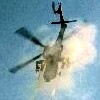
An Israeli attack helicopter fired a missile at a grey Mazda on a road near the municipality of Jenin. The missile struck the car and destroyed it completely. Medical aid arrived at the car and three bodies were pulled from the car. The bodies were transferred to Dr. Khalil Suleiman Hospital in Jenin where the bodies were identified as Mahmoud As’ad Abu Khalifa, Yamen Jamil Abu al-Haija and Amjad Husni Mahmoud al-Hajja. The three victims had survived an assassination attempt in August. Then a Palestinian child was injured when a missile hit her family home. PCHR strongly condemns this attack and remains concerned. 

Without peace settlement, both sides face continued violence, UN civil society conference told (2/2)


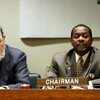
Drawing on the success of similar events in 2002 and 2003, the United Nations International Conference of Civil Society in Support of the Palestinian People opened at the United Nations Headquarters this morning. Unless a peace settlement between the Israelis and the Palestinians was reached — and that could only be achieved through official political negotiations resulting in an agreement between the parties — both sides would face the grim reality of a never-ending stalemate and continued violence, Secretary-General Kofi Annan said today at the opening of a two-day United Nations International Conference of Civil Society in Support of the Palestinian People.Conference of Civil Society in Support of the Palestinian People.